
Case study
US fiscal stimulus and direct investment: the overlooked beneficiaries.
$840bn of new programmes. Thirty direct government stakes. Every desk covered the same six household names — so we asked Theso's agents what everyone was missing. Ten minutes per hypothesis later: QUBT, ONDS and LUNR.

Jim Boucherat · Research desk
3 Sep 2026 · 9 min read
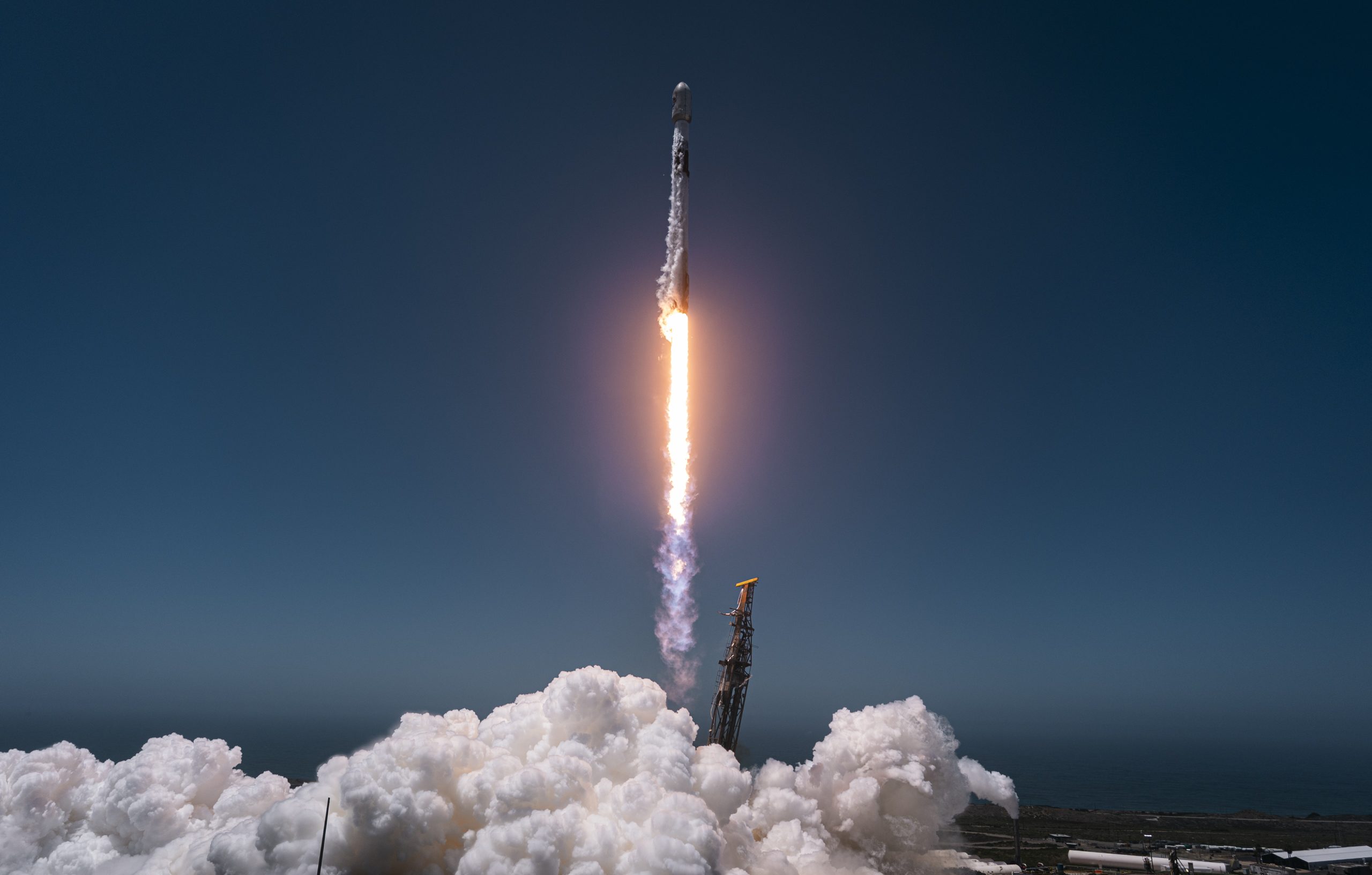
The direct-investment era: grants become equity
01 · The most crowded trade in Washington
The 2026 fiscal package is the largest peacetime industrial programme the US has run: roughly $840bn of new spending across semiconductor capacity, grid modernisation, defence autonomy, quantum research and space infrastructure. What makes this cycle different is the instrument. For the first time at scale, the government is not just writing grants — it has taken direct equity stakes in around 30 listed companies.
The front page wrote itself. Within 48 hours of the announcement, the six largest named beneficiaries had absorbed almost all of the flow, repricing 8–14% on volumes their float could barely clear. By the time a fundamental desk finished its first memo, the obvious trade was gone.
That is exactly the situation Theso is built for. The interesting question was never "who is named in the bill?" It was: who benefits from the bill that the market has not yet connected to it?
02 · One thesis, phrased as a question
We gave the desk's thesis to Theso the way a PM would phrase it to an analyst:
"Find listed companies with material revenue exposure to the new programmes — direct or one supplier step removed — that are not named in the legislation, have under five covering analysts, and have not repriced since the announcement."
Thesis brief · 28 Aug 2026, 07:12 LDN
Three constraints did the real work. Not named excludes the crowded front page. Under five covering analysts screens for genuine neglect. Has not repriced confirms the market hasn't quietly made the connection already.
03 · Six agents, ten minutes per hypothesis
Theso decomposed the brief into parallel hypotheses and dispatched its agents across the 40,000-stock universe:
• Search agent — mapped every programme line item to industry codes and named awardees, then walked one step out along supplier and contract relationships.
• Earnings agent — read four quarters of transcripts and filings per candidate, scoring revenue exposure to the programmes.
• Rivals agent — checked whether repricing had happened by proxy: if the closest comparable had moved, the "overlooked" claim fails.
• Coverage and flow checks — analyst counts, ownership and price action applied as hard filters.
Each hypothesis took under ten minutes end to end. The desk reviewed 23 survivors the same morning. Three cleared every constraint with room to spare.
04 · Three tickers from below the fold
QUBT — Quantum Computing Inc · 3 covering analysts
Photonic chips sit one supplier step below two named quantum-research awardees; foundry capacity is contracted through 2027. Overlooked because it is classified as "speculative quantum" and screened out by market-cap floors on most desks.
ONDS — Ondas Holdings · 2 covering analysts
Autonomous drone platforms qualify under the defence-autonomy and critical-rail line items; existing federal frameworks shorten procurement. Overlooked because it is filed under "rail data networks" in most taxonomies — the defence exposure never made it into the label.
LUNR — Intuitive Machines · 4 covering analysts
Lunar logistics and comms contracts scale directly with the space-infrastructure allocation; sole-source position on two NASA programmes. Overlooked because it is priced as a launch-event stock; the recurring services backlog was ignored between missions.
None of the three appears in the bill. All three sell to, or supply, entities that do. That single degree of separation is where the coverage gap lives.
05 · What the evidence trail showed
Every Theso verdict ships with its receipts — the filings, transcript passages, contract records and relationship edges that produced it. The decisive evidence was mundane rather than clever: a foundry-capacity disclosure buried in a QUBT 10-Q appendix, a Federal Register procurement notice matching ONDS's platform spec, and the services line growing through LUNR's launch-gap quarters.
"Nothing the agents surfaced was secret. All of it was public, filed and searchable. It was overlooked because reading everything is not a job a human team can staff."
Jim Boucherat · Research desk
The desk took all three names into its standard diligence process — sizing, liquidity and risk limits remain human decisions. Theso compressed the discovery phase from three analyst-weeks into a morning, with an auditable trail for each claim.
06 · Coverage is the edge
Direct government investment will keep producing this shape of opportunity: a loud, instantly-priced centre and a quiet, unpriced periphery. The centre is efficient within hours. The periphery stays inefficient for weeks, because connecting it to the event requires reading volumes of material no desk fully staffs.
That is the structural argument for agentic research. Not that a model out-thinks an analyst — it doesn't — but that it out-reads one by four orders of magnitude, and never stops. The thesis stays yours. The coverage becomes total.
Agent outputs are model-generated signals, not investment advice. Tickers are discussed as research-process examples, not recommendations. Figures reflect desk estimates at the time of writing, 3 Sep 2026.
Theso · Research, always on
London · 2026